St. Virgil chapel
Description
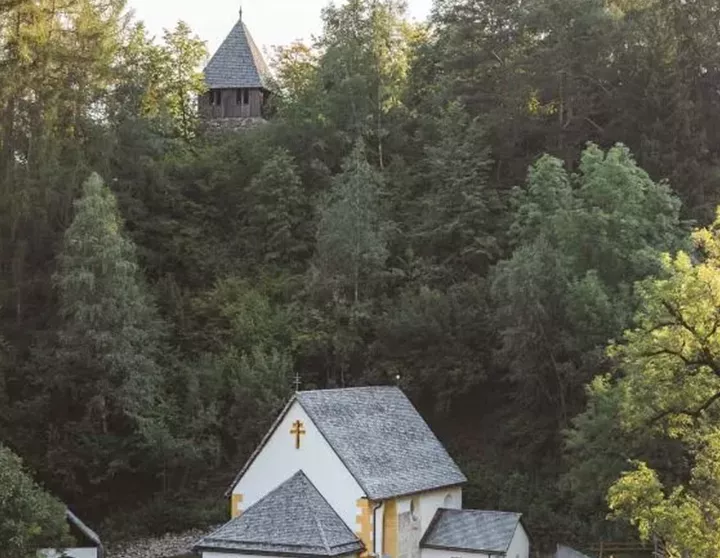
The first documented mention of the new late-Gothic chapel, which was presumably built on the site of a Romanesque chapel, dates from 1498. What is remarkable is that, although it is dedicated to St Virgil
of Trent, the worship of the three Bethen – Anbett, Gwerbett and Willbeth – was practised here, as evidenced by paintings.
The three Bethen are still venerated as saints under various names in many Alpine regions, but they are in fact pre-Christian goddesses who have been Christianised. The chapel’s location is also consistent with the veneration of these goddesses. A large ash tree and a spring – which has since been channelled – point to an ancient spring sanctuary that was later Christianised.
The hall-style structure of the chapel was built in the 16th century. Inside, there is a mixture of Gothic and Baroque works of art and paintings.